The Artists Way Programme Reflection - Week 5

Week 5 of The Artist’s Way invited the group to step beyond limitation and reconnect with something many of us quietly lose over time... a sense of possibility.
Following a week of creative deprivation, participants returned with a heightened awareness of how external noise, internal pressure and habitual thinking can shape (and sometimes restrict) the way we imagine our lives and creative paths. What emerged was an honest and expansive conversation about belief, capacity and the courage it takes to want more for ourselves.

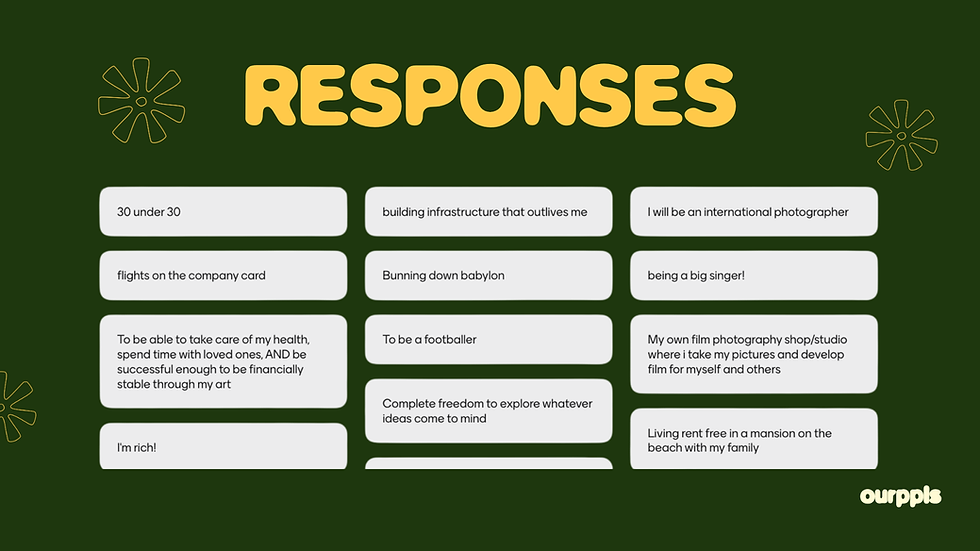
A central moment in the session focused on identifying “limitless aspirations”. The dreams our participants hold, often quietly, about the lives they would like to live.
These ranged from achieving financial stability through creative work, to travelling the world, building businesses and having the freedom to explore ideas without restriction. What was striking was not how unrealistic these aspirations felt, but how close and tangible many of them actually seemed once spoken aloud. The discussion revealed a shared understanding: the distance between where we are and where we want to be is often shaped less by external barriers, and more by the beliefs we hold about what is available to us.
Participants reflected on how easy it is to internalise limits, be it our experience or resources, and how these beliefs can quietly prevent us from taking risks. Reframing those narratives became an essential part of the work, replacing doubt with the possibility that more is available than we allow ourselves to believe.
Building on this, the group explored the importance of dismantling internal barriers to success.
There was a shared recognition that many of the lives we aspire toward already exist — lived by people who are not necessarily more qualified, but simply willing to try. Exposure to different environments, communities and ways of living was described as a powerful reminder that these paths are not out of reach. The work, then, becomes less about waiting for permission and more about unlearning the belief that we are not capable.
Finding the Flow
As the conversation shifted to morning pages, many participants reflected on a growing sense of ease within the practice. Where earlier weeks felt heavy or overly analytical, there was now a noticeable shift toward flow. Letting go of the need to write something profound allowed for a more honest and natural rhythm to emerge. In many ways, this mirrored the wider theme of the week — trusting that not everything needs to be forced in order to be meaningful.
Letting Go of Control
Closely tied to this was an honest reflection on control and people-pleasing.
Participants spoke about the tendency to over-deliver, overextend or prioritise others at the expense of their own needs. Protecting creative energy, described by one participant as safeguarding their “child artist”, became an important takeaway. There was also acknowledgement that moving forward creatively often requires a level of uncertainty; learning to “not know” and allowing things to unfold without forcing outcomes.

Permission, Care and Possibility
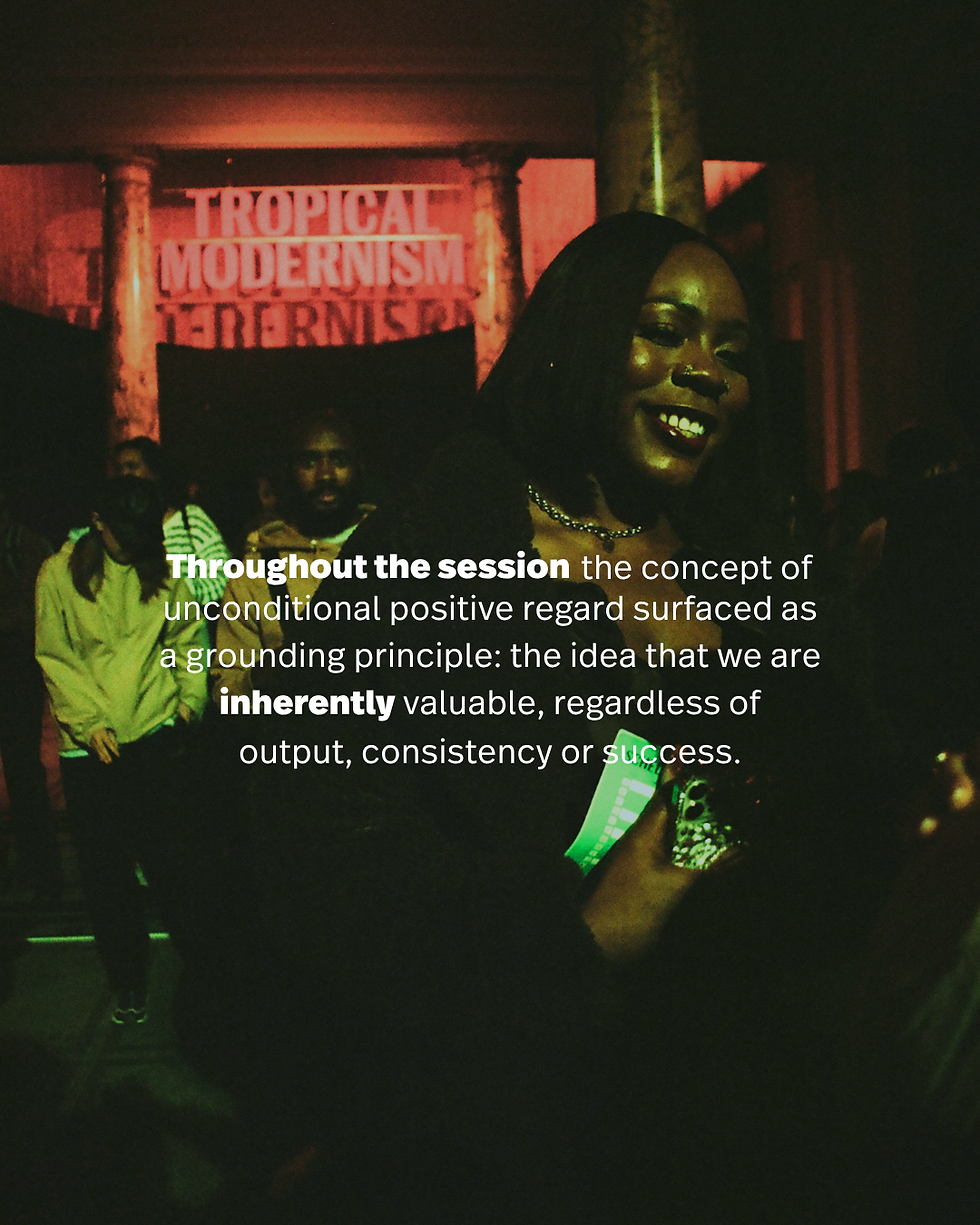
Throughout the session, the concept of unconditional positive regard surfaced as a grounding principle: the idea that we are inherently valuable, regardless of output, consistency or success.
This perspective created space to consider not just what we want to achieve, but how we want to treat ourselves in the process. The group also explored “forbidden joys” — the things we deny ourselves despite knowing they bring us happiness or ease. Questioning why these desires feel inaccessible became another way of uncovering the limits we unconsciously maintain.
Week 5 offered a powerful reminder that recovering a sense of possibility is not about sudden transformation, but about gradually expanding what we allow ourselves to believe, want and pursue.
It requires honesty about the ways we hold ourselves back, compassion for where we are, and a willingness to imagine beyond what feels immediately practical.
In many ways, the work is simple, though not always easy: to trust, to try, and to give ourselves permission to move toward the lives we can already begin to see.
If you doing the book in community is something that you are interested in, you don't have to be part of our programme to benefit from the experience of bearing witness to the transformation of life through acts of creativity in community. Julia Cameron offers a 'Creative Clusters Guide' in the book with how you can gather with friends, family or colleagues to journey the book together.


Comments