The Artists Way Programme Reflection - Week 6

Reaching the halfway point of The Artist’s Way felt significant in a quiet, grounding way. There was no grand moment but rather a shared acknowledgement: we are still here. Still showing up, still trying, still choosing ourselves in small, sometimes inconsistent, but meaningful ways.
Week 6 invites us into something that, for many of us, sits at the centre of our creative lives but is rarely spoken about with honesty: money.
“Recovering a sense of abundance” sounds expansive in theory, but in practice, it asks us to confront the places where we feel most limited. And for many in the group, money surfaced immediately as both a practical and emotional barrier. It was described as instability, as pressure, as something that shapes decisions before creativity even has the chance to emerge.
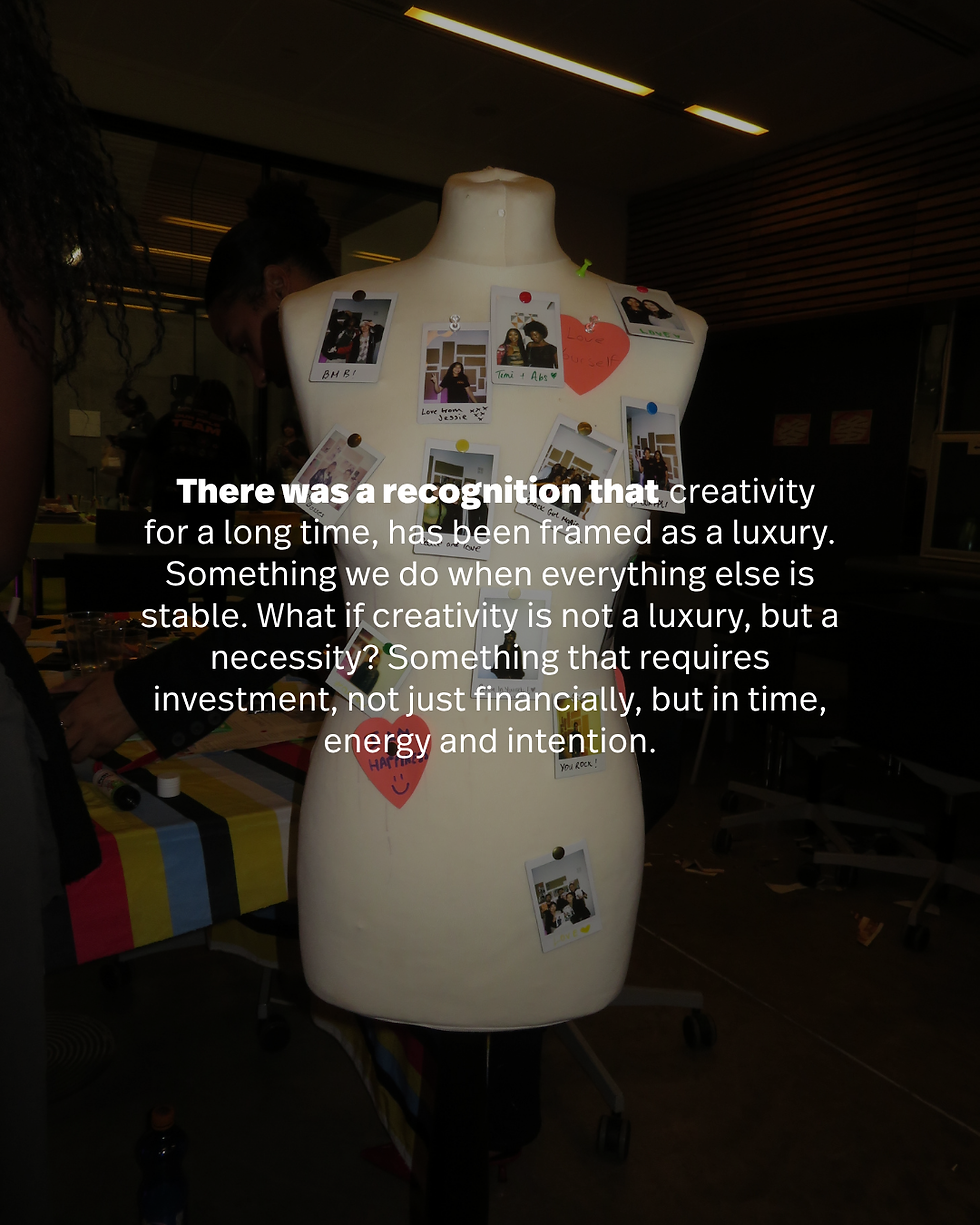
There was a recognition that creativity, for a long time, has been framed as a luxury. Something we do when everything else is stable, when there is time, when there is spare income. But through conversation, that idea began to shift. What if creativity is not a luxury, but a necessity? Something that requires investment, not just financially, but in time, energy and intention.
One participant shared how, over time, they’ve begun to prioritise their creative practice in their budget (buying film, developing photos) treating it not as an extra, but as something essential to their life. Another spoke about actively working to dismantle “money trauma,” recognising how deeply inherited beliefs about scarcity can shape the way we engage with our creative selves.
It became clear that our relationship with money is rarely just about money. It is layered with family experiences, cultural expectations, and unspoken rules about what is considered “safe” or “responsible.” For some, money was tied to stress and secrecy. For others, it carried the weight of expectation — to earn, to provide, to choose stability over exploration.
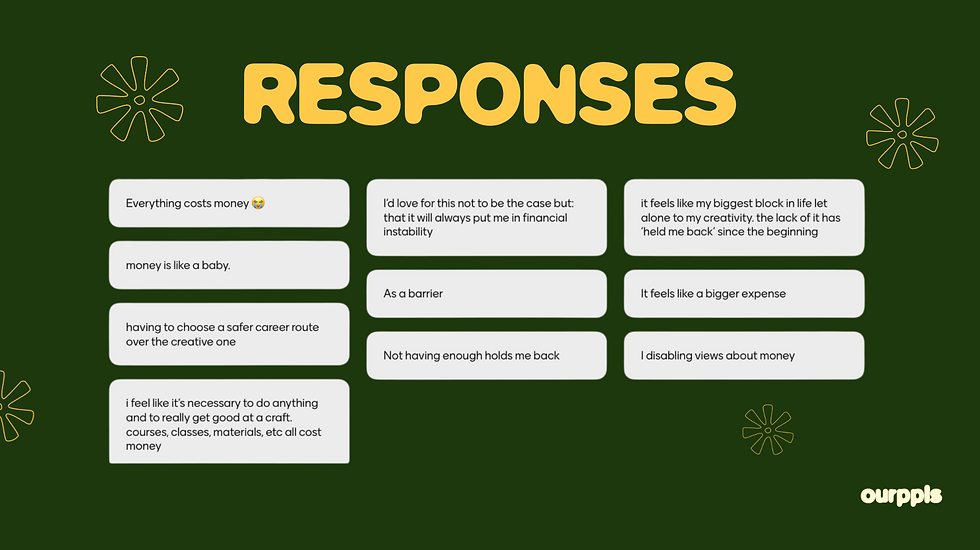
And yet, beneath all of this, there was also a quieter question emerging:
If money wasn’t a barrier, what would you allow yourself to do?
For some, the answer felt exciting. For others, it felt exposing. One participant shared that without financial limitation, the fear would shift — no longer about access, but about whether the work itself would be “good enough.” It was a reminder that sometimes the barriers we hold onto also protect us from deeper vulnerability.
Alongside these heavier reflections, the week also invited us into something softer: joy.
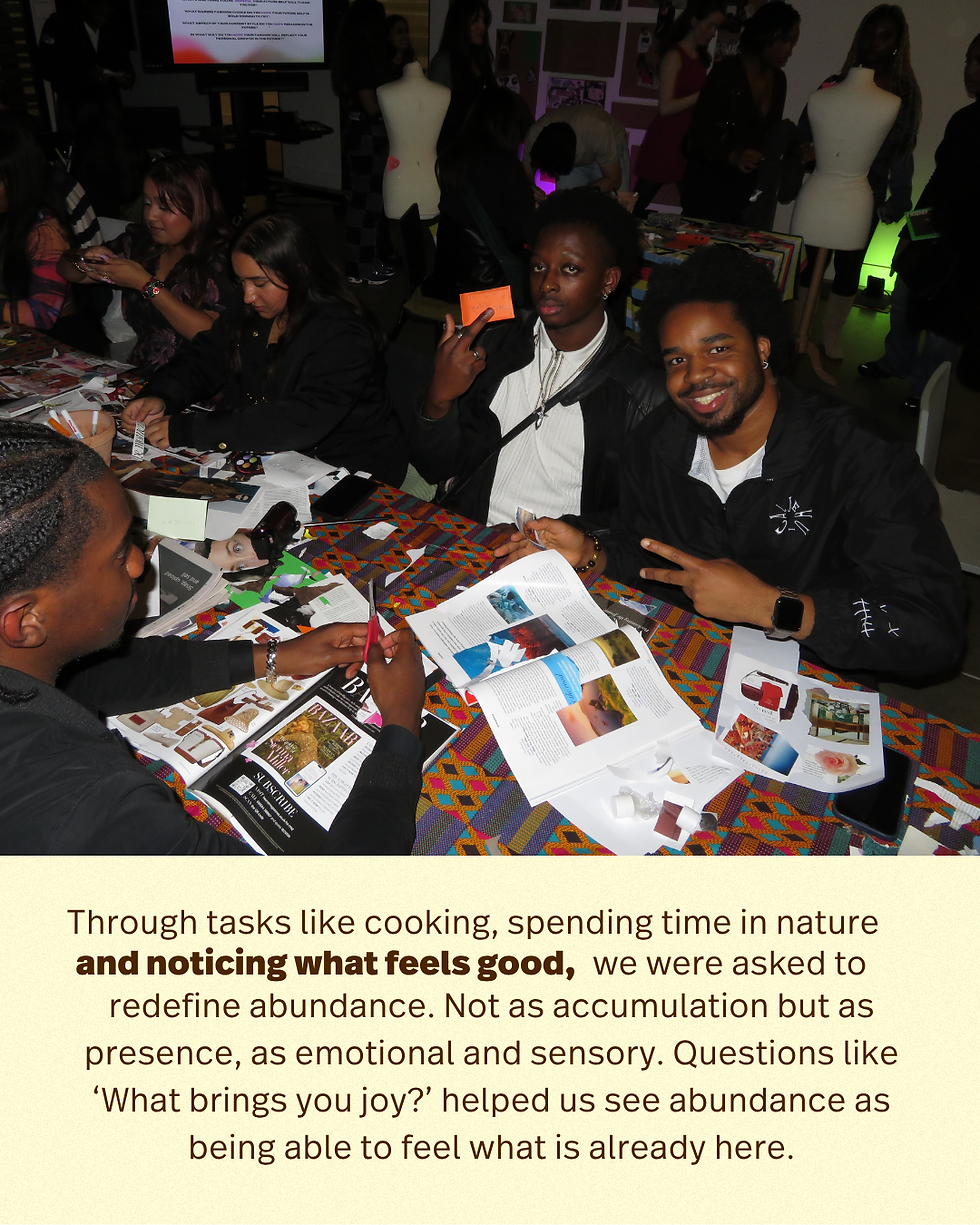
Through simple tasks like cooking, spending time in nature, collecting small objects, noticing what feels good — we were asked to redefine abundance. Not as accumulation but as presence, as emotional and sensory.
What brings you joy?
What feels like enough?
The answers were simple, almost disarmingly so: rest, family, nature, quiet moments, creating without pressure. In many ways, abundance began to look less like having more, and more like being able to feel what is already here.
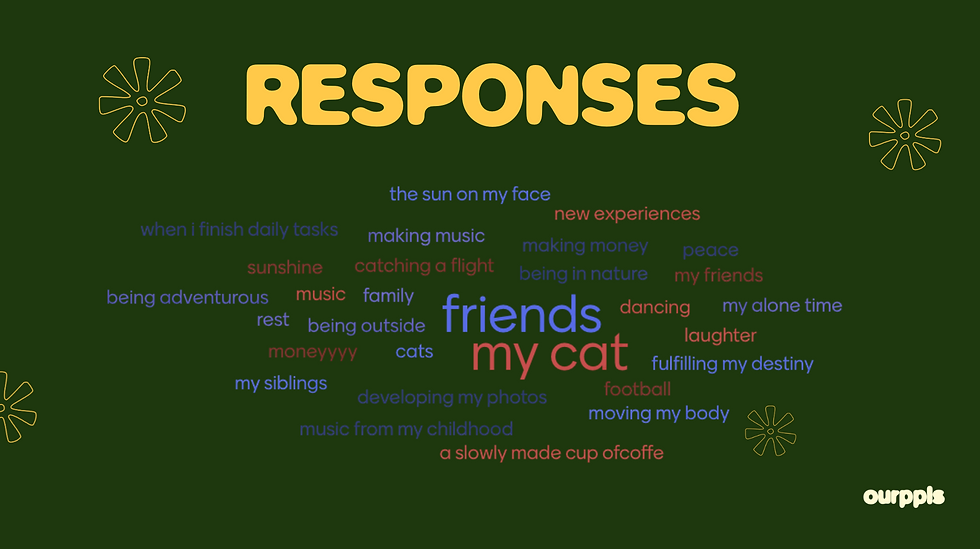
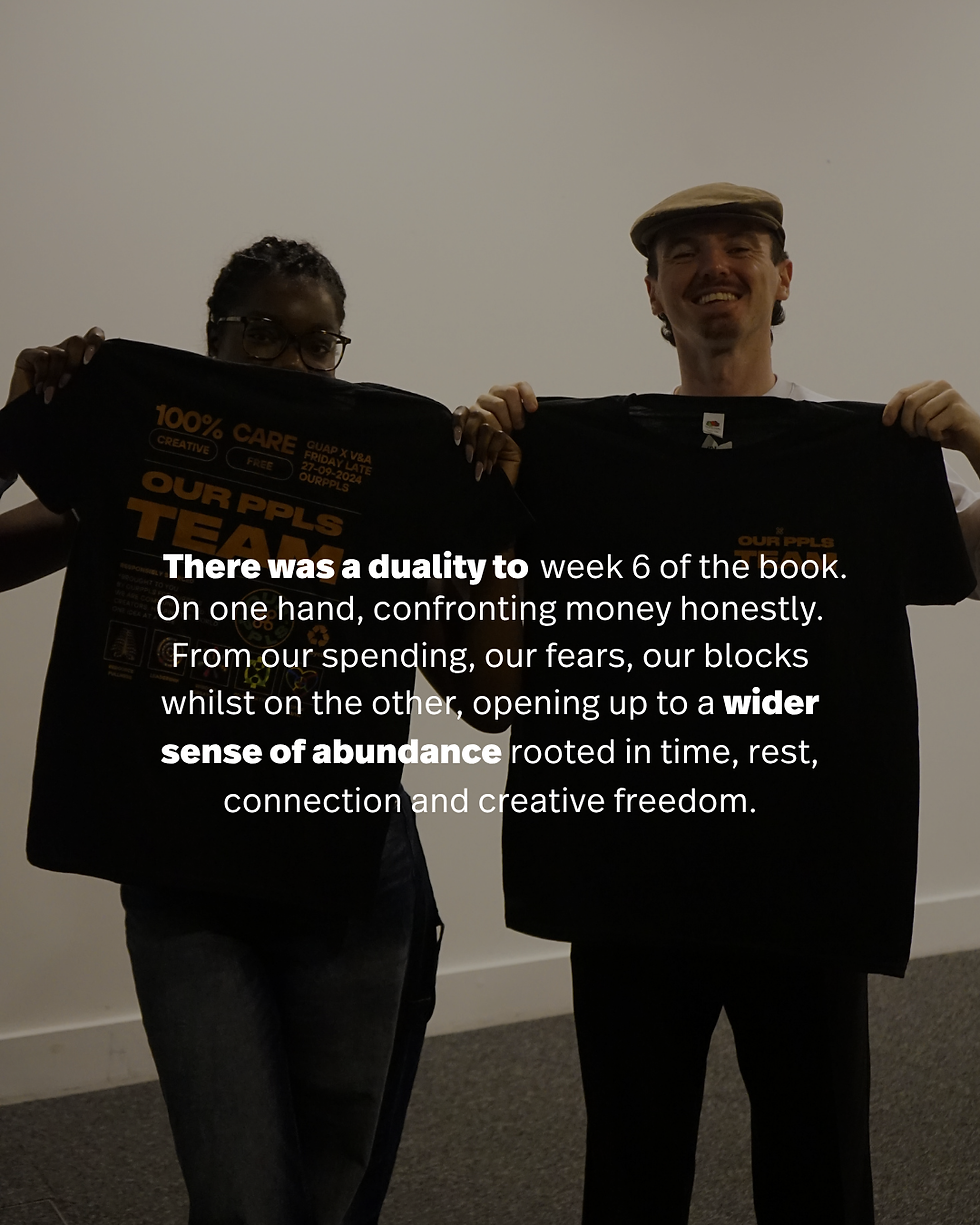
This duality defined the week. On one hand, confronting the realities of money, from tracking spending, acknowledging habits, recognising fear. On the other, expanding our understanding of abundance beyond finances, into time, space, connection and creativity.
There was also honesty around resistance. Some found the tasks difficult or disconnected from where they were. Others found them light and refreshing. Some kept up with morning pages, others struggled to maintain consistency. And yet, even in the inconsistency, there was continuity. A sense that the work was still happening, even when it didn’t look perfect.
One participant shared that they hadn’t completed the tasks, but realised they had been living them unconsciously — cooking for others, reflecting on spending, moving through the themes in their own way. That moment felt important. A reminder that this process isn’t about rigid completion, but about integration.
As we move beyond the halfway point, there’s a growing understanding that recovery isn’t linear. It doesn’t arrive neatly or all at once. It unfolds through small shifts — in how we think, how we prioritise, how we speak to ourselves.
Week 6 didn’t resolve our relationship with money, nor did it suddenly unlock abundance. But it did something perhaps more valuable: it created space to question the narratives we’ve been holding, and to imagine something different. And maybe that is where abundance begins? Not in having everything, but in believing that more is possible than we once allowed ourselves to see.
If you doing the book in community is something that you are interested in, you don't have to be part of our programme to benefit from the experience of bearing witness to the transformation of life through acts of creativity in community. Julia Cameron offers a 'Creative Clusters Guide' in the book with how you can gather with friends, family or colleagues to journey the book together.


Comments