The Artists Way Programme Reflection - Week 9
By Week 9, a shift becomes noticeable because there’s a deeper awareness of what sits beneath the blocks we’ve been naming week after week. This time, the focus turned toward something both essential and often overlooked: compassion. More specifically, how we extend it to ourselves.
The starting point was fear. Not as an abstract idea, but as something deeply embedded in the creative process. Fear of failing. Fear of succeeding. Fear of being seen.For many, these fears had been present for so long that they no longer felt like fear at all, but instead showed up as hesitation, avoidance, or a constant underlying pressure.

There was a shared recognition that what we often label as procrastination or inconsistency is rarely about discipline. It’s about protection. A way of avoiding the discomfort that comes with putting something forward, and risking what might come back.
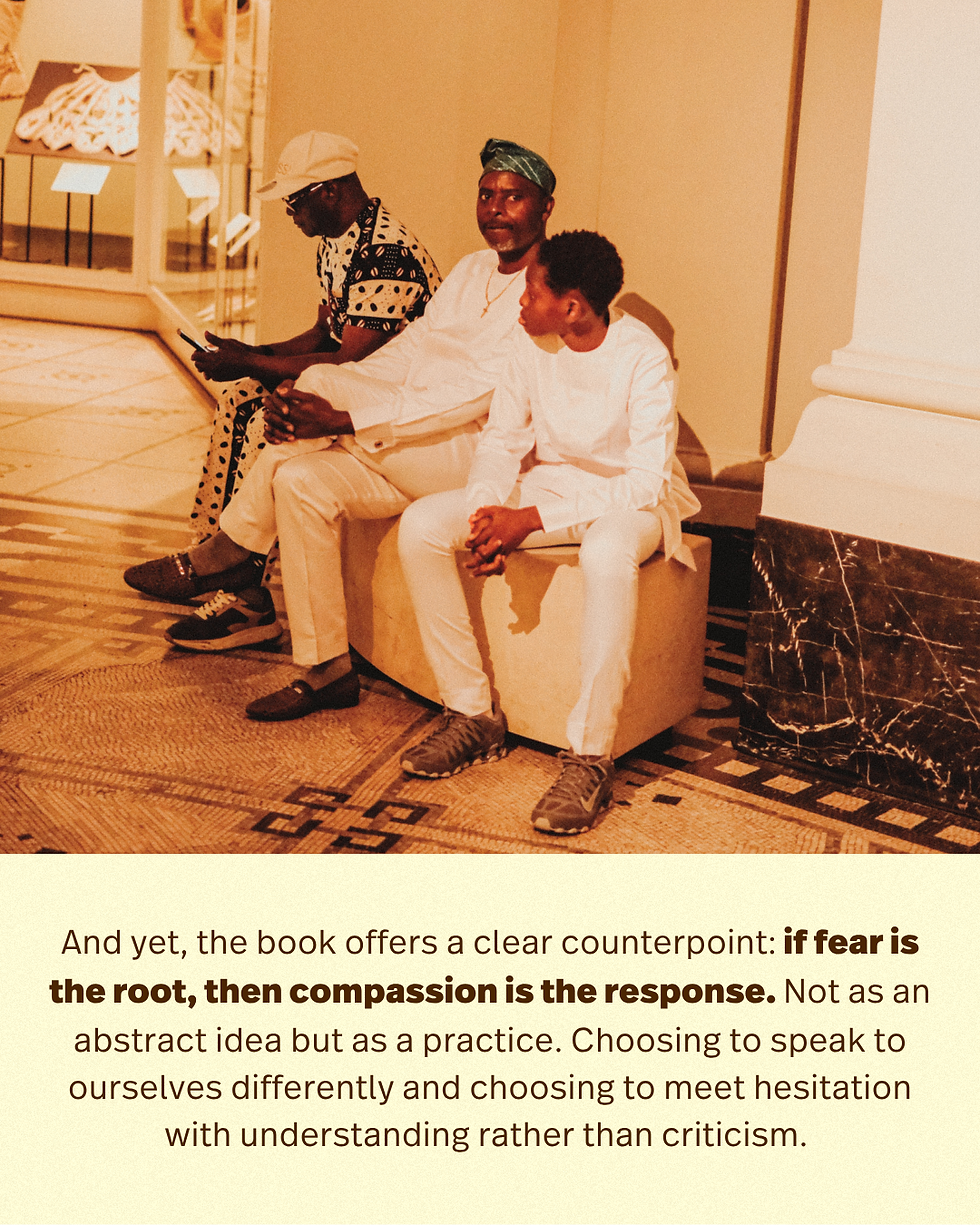
And yet, the book offers a clear counterpoint: if fear is the root, then compassion is the response. Not as an abstract idea but as a practice. Choosing to speak to ourselves differently. Choosing to meet hesitation with understanding rather than criticism. One participant reflected on the shift from being their own harshest critic to actively becoming their own supporter. That decision alone began to change how they approached their work.
There was also an honest conversation around the fear of visibility. Not just being seen, but being exposed. The current landscape, particularly online, has blurred the line between sharing work and sharing self. For some, success doesn’t just represent opportunity, but also a loss of privacy, control and safety.
What emerged here was the importance of boundaries. The understanding that visibility does not require full access. That it is possible to share intentionally and to define what is public and what remains protected. In many ways, this became an extension of self-compassion through creating conditions that make it safer to show up.
Perfectionism and procrastination came up again, but this time not as habits to fix, but as signals pointing to something deeper. A fear of being inadequate. A fear of doing something badly. And ultimately, a fear of being judged.
Rather than trying to eliminate these feelings, the work this week invited us to respond to them with care. To acknowledge that they exist, and then to continue anyway. There was also a shift in how success was discussed. For some, the fear wasn’t about failing, but about what happens if things actually go well; the responsibility or the unknown that comes with growth.
It became clear that fear doesn’t only sit at the point of failure. It often appears at the edge of expansion and this is the exact moment where compassion becomes essential. Not as a way to remove fear, but as a way to move alongside it.
Enthusiasm - Greek - “To be filled with God”
The conversation also turned toward asking for help. For many, this felt uncomfortable due to our in-built independence, pride, or past experiences of having to navigate things alone. Asking for support can feel like vulnerability, or even weakness. But within the group, there was a growing recognition that creative work is rarely sustained in isolation.
The shift wasn’t necessarily in asking more, but in being mindful about who you turn to, and recognising that the right support can strengthen, rather than diminish, your autonomy.
Another idea that stood out was the distinction between discipline and enthusiasm. We often associate creativity with structure and consistency but this chapter suggested that what sustains creative work over time isn’t just discipline, but enthusiasm. A genuine connection to the process with a sense curiosity, play, and engagement. Because without that, the work can begin to feel heavy and disconnected.
Toward the end of the session, there was an acknowledgement of how far everyone has come. Some reflected on earlier versions of themselves, captured in letters or past journal entries, and noticed that change had already happened, often in ways they hadn’t fully recognised.
Not everything is resolved but there has certainly been movement and change thanks to our growing awareness, honestly and kindness. To ourselves and our inner artist child.
Week 9 was a personal favourite because it doesn’t ask us to be fearless. It asks us to be compassionate enough to continue despite fear. To speak to ourselves with care and create environments where we feel safe to try. And to trust that growth doesn’t come from pressure, but from patience.

If you doing the book in community is something that you are interested in, you don't have to be part of our programme to benefit from the experience of bearing witness to the transformation of life through acts of creativity in community. Julia Cameron offers a 'Creative Clusters Guide' in the book with how you can gather with friends, family or colleagues to journey the book together.


Comments